
You searched for:
“argot”
1. A specialized vocabulary or set of idioms used by a particular group: The two organizations were still able to communicate with each other in their separate argots.
2. The language of a particular group which is associated with similar activities; for example, the language of street gangs or criminals: Before the fight started, the mobs were yelling out their peculiar argots, or special slang terms, to communicate with their fellow mob members as a kind of code.
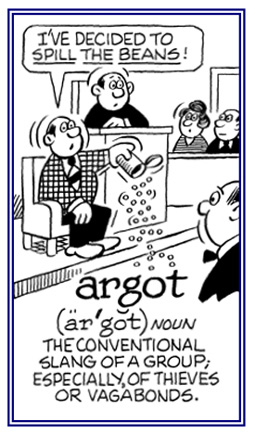
© ALL rights are reserved.
Go to this Word A Day Revisited Index
2. The language of a particular group which is associated with similar activities; for example, the language of street gangs or criminals: Before the fight started, the mobs were yelling out their peculiar argots, or special slang terms, to communicate with their fellow mob members as a kind of code.
The teenagers were confusing their teachers by using special argots in their written reports.
The British have their argots and Americans usually have completely different argots which often result in a lack of understanding of the argots of the two cultures.
Sometimes it can be very difficult to understand the various argots of scientists, lawyers, and even medical professionals.
3. Etymology: about 1860, from French argot, "the jargon of Paris rogues and thieves"; earlier "the company of beggars"; from Middle French (the French language as written and spoken about 1400 to 1600), "a group of beggars", otherwise, the origin of the term is unknown.
Go to this Word A Day Revisited Index
so you can see more of Mickey Bach's cartoons.
This entry is located in the following units:
English Words in Action, Group A
(page 5)
Words of French origin
(page 1)
The language or slang terms of a particular group which is associated with similar activities; for example, the language of street gangs, criminals, sport groups, technologists, and many other specialties. (1)
This entry is located in the following unit:
Word a Day Revisited Index of Cartoons Illustrating the Meanings of Words
(page 14)